Shouldering Grid
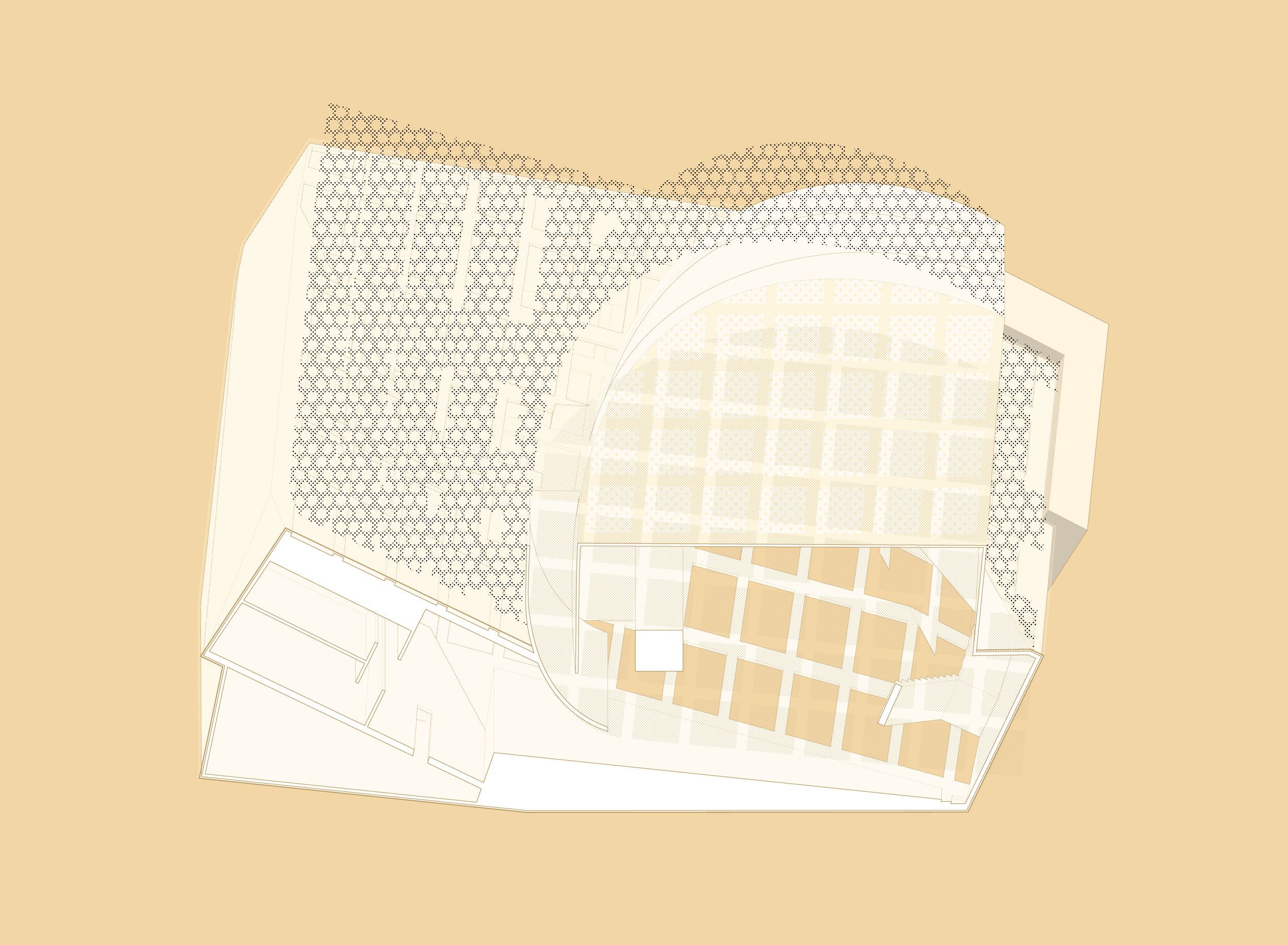
Oblique Choisy Render
In this introductory studio, we explored the grid and how it may be used as a measuring device. Additionally, we experimented with the interaction of a grid with a non-orthogonal form, in this case, a flexible piece of paper. This culminated in a proposal for a community theater and art gallery to replace an existing structure in the Little Tokyo neighborhood of downtown Los Angeles. The final sectional model shown above is the culmination of this process.
Fall 2023, Faculty: Matthew Au
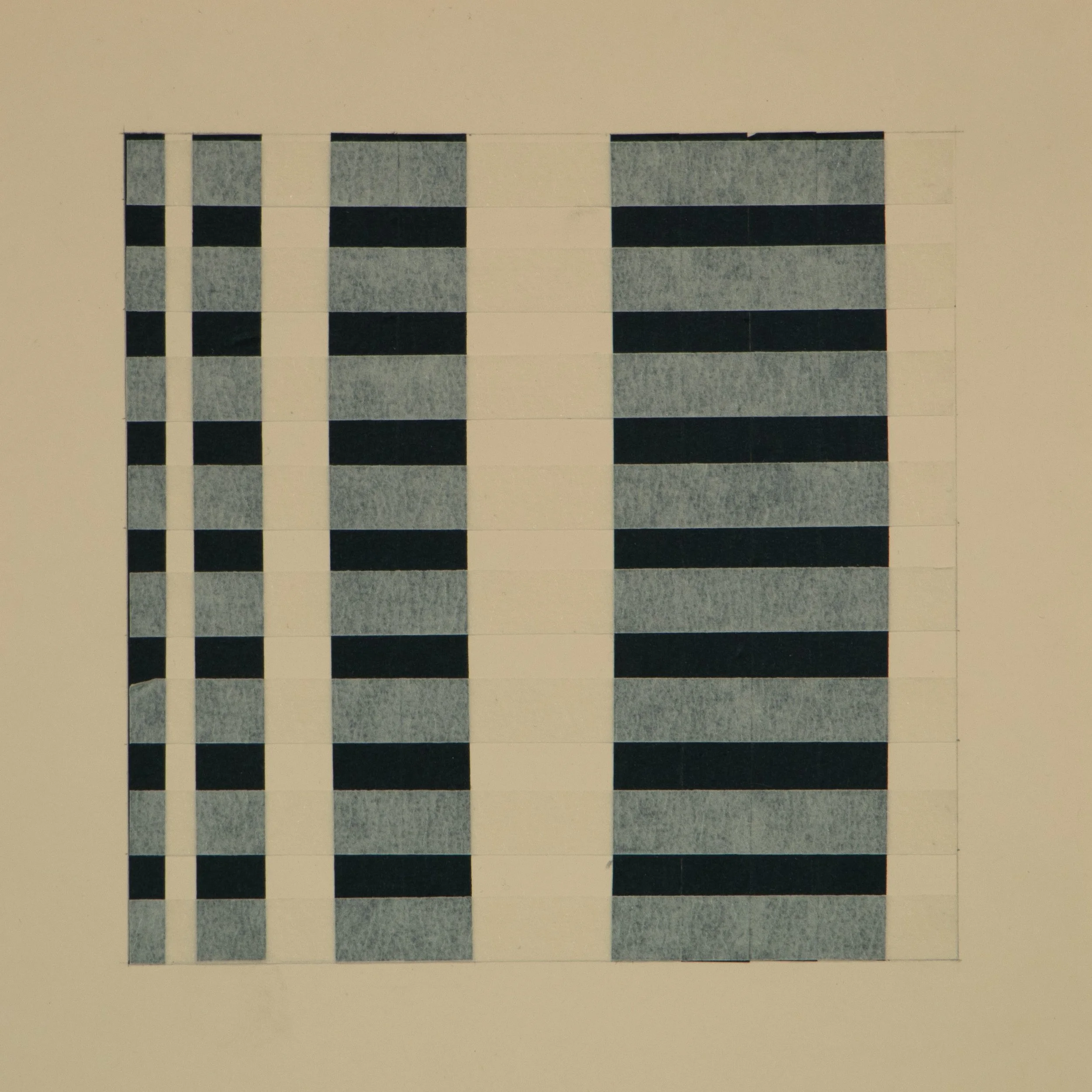
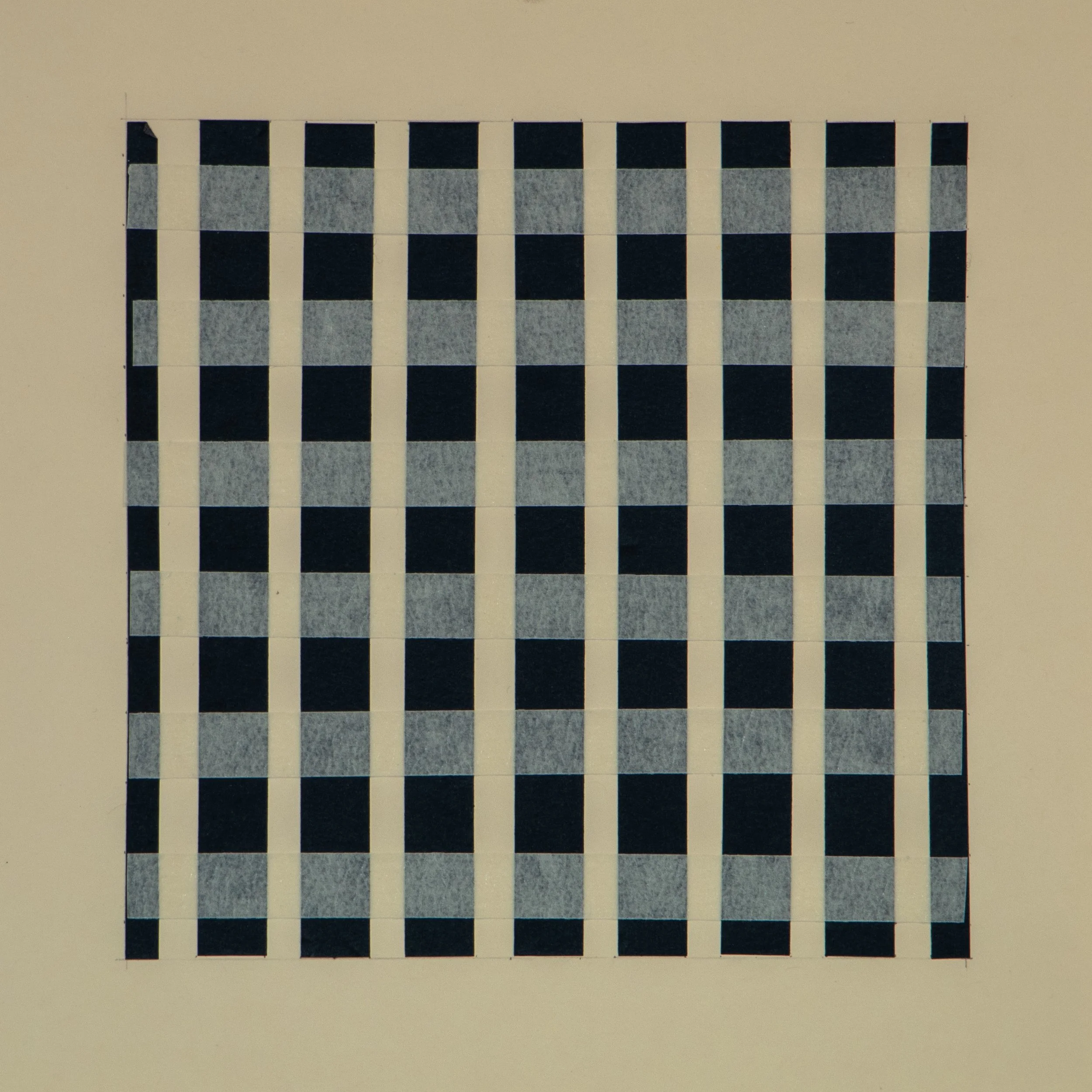
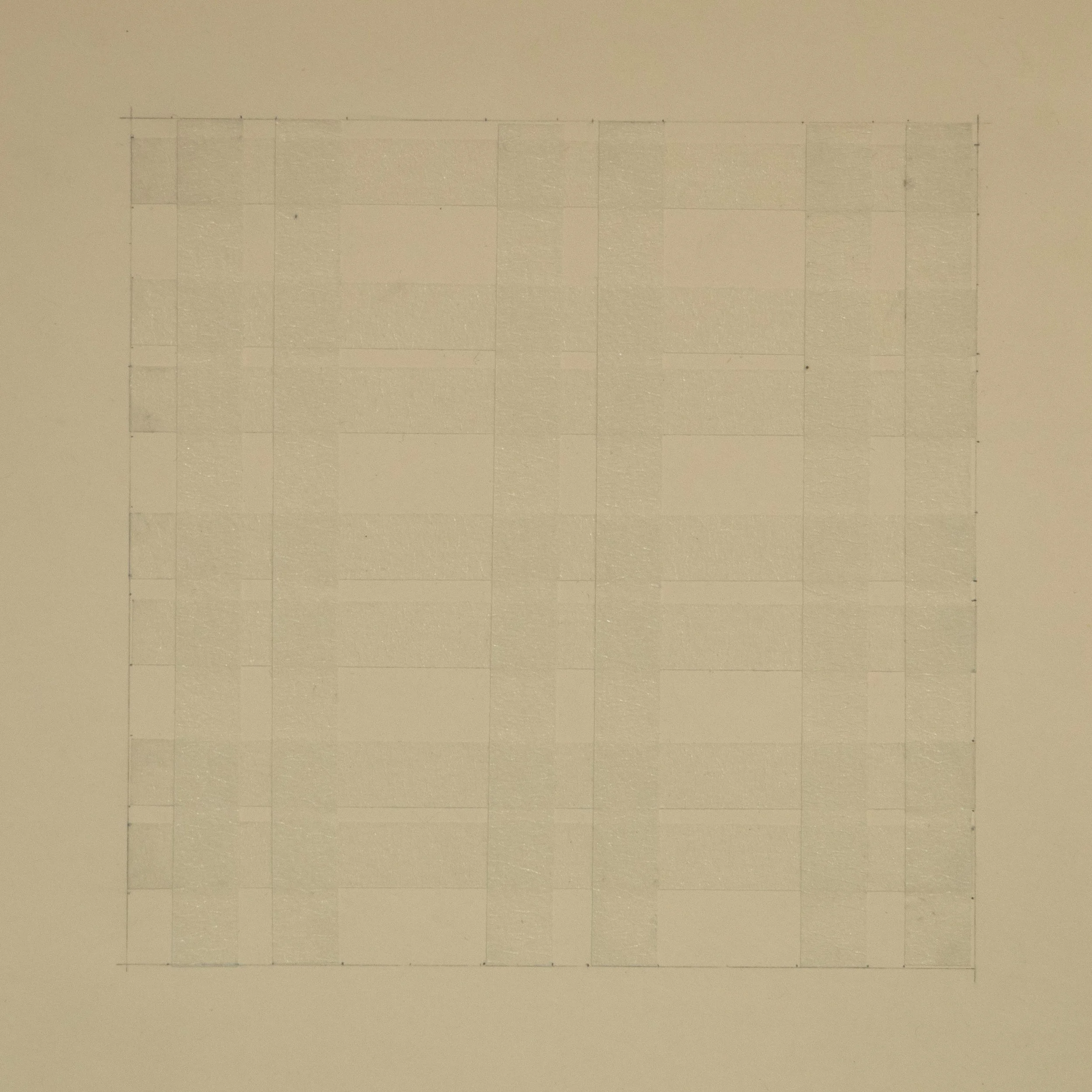
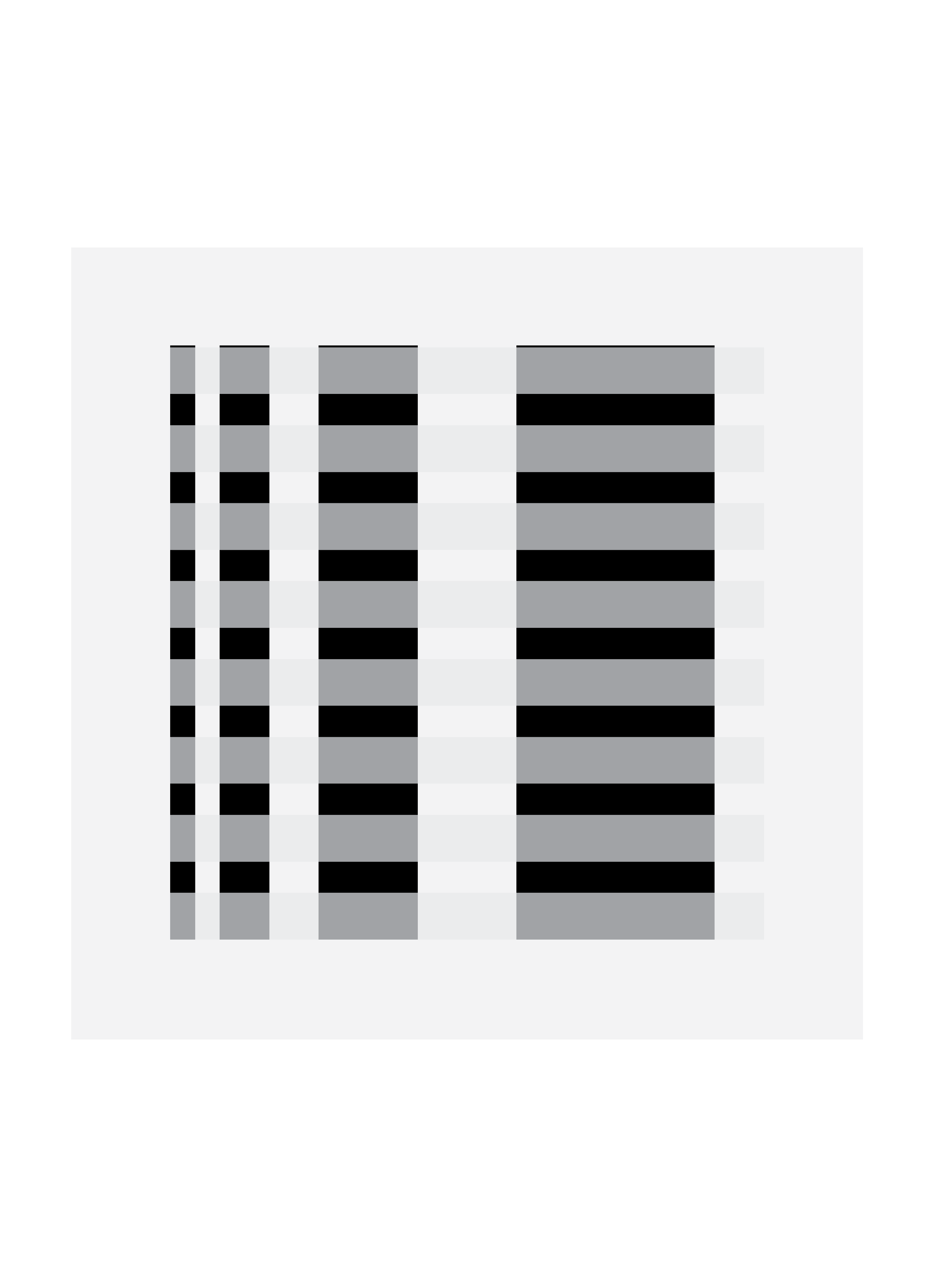
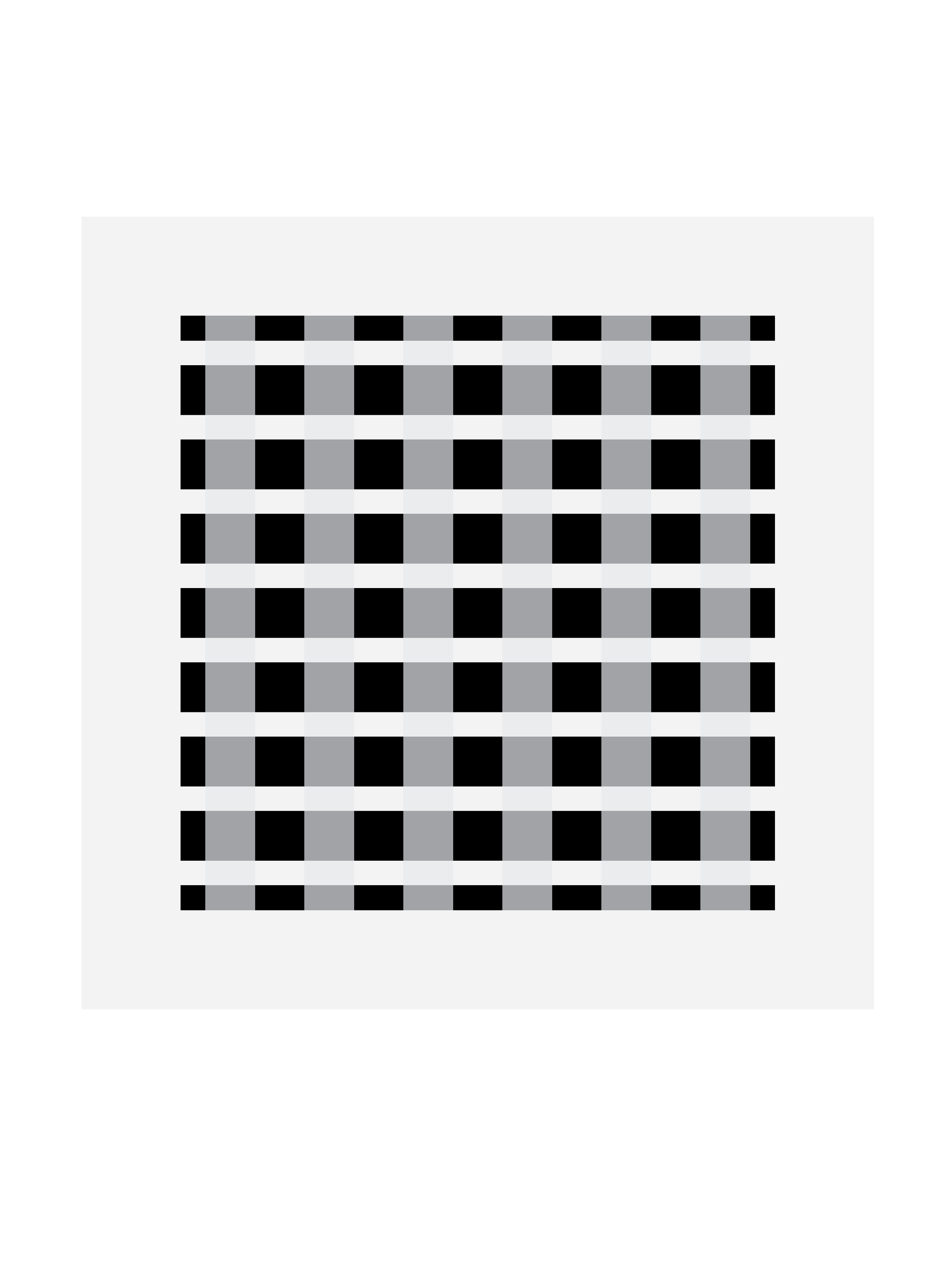

To begin, I created my own grids using different varieties of masking tape on 8”x8” squares of manilla paper, and replicated them digitally. I was interested especially in masking properties of the tape. The beige masking tape did not cover the black tape underneath it completely, and combined with the similarly colored manilla, created an interesting tension between the two different types of tape and the manilla paper base. I was also interested in the way in which a measurement grid can imply scale. I created a larger grid measuring 24”x36” that incorporated two different grids, and mounted it on a ½” thick substrate. The spacing of the black tape increases exponentially in each successive row and column, while the spacing of the beige tape remains the same throughout. The contrast between the exponentially scaled grid and the static grid created interesting intersections in different areas of the field.
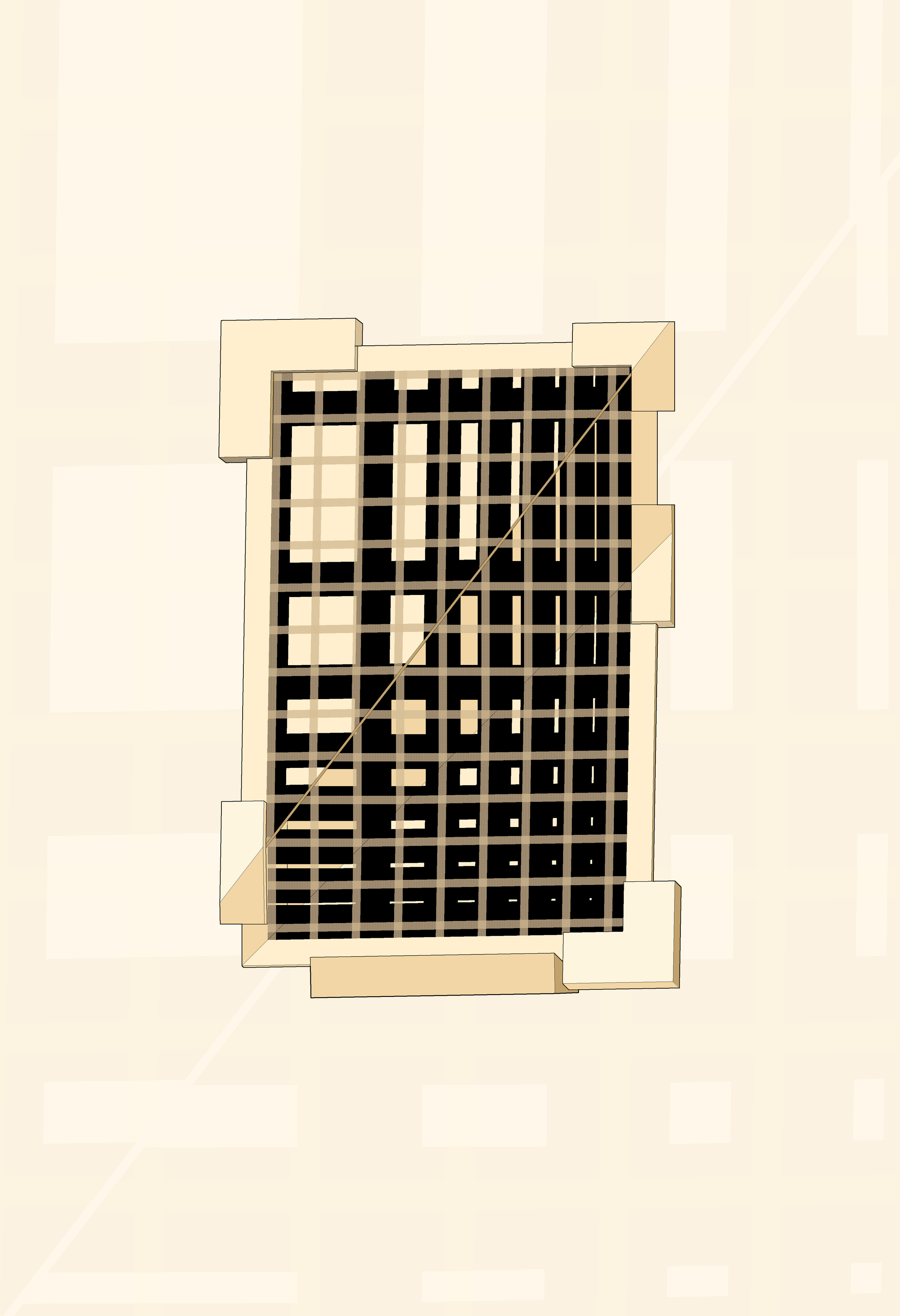
Elevation drawing of large grid
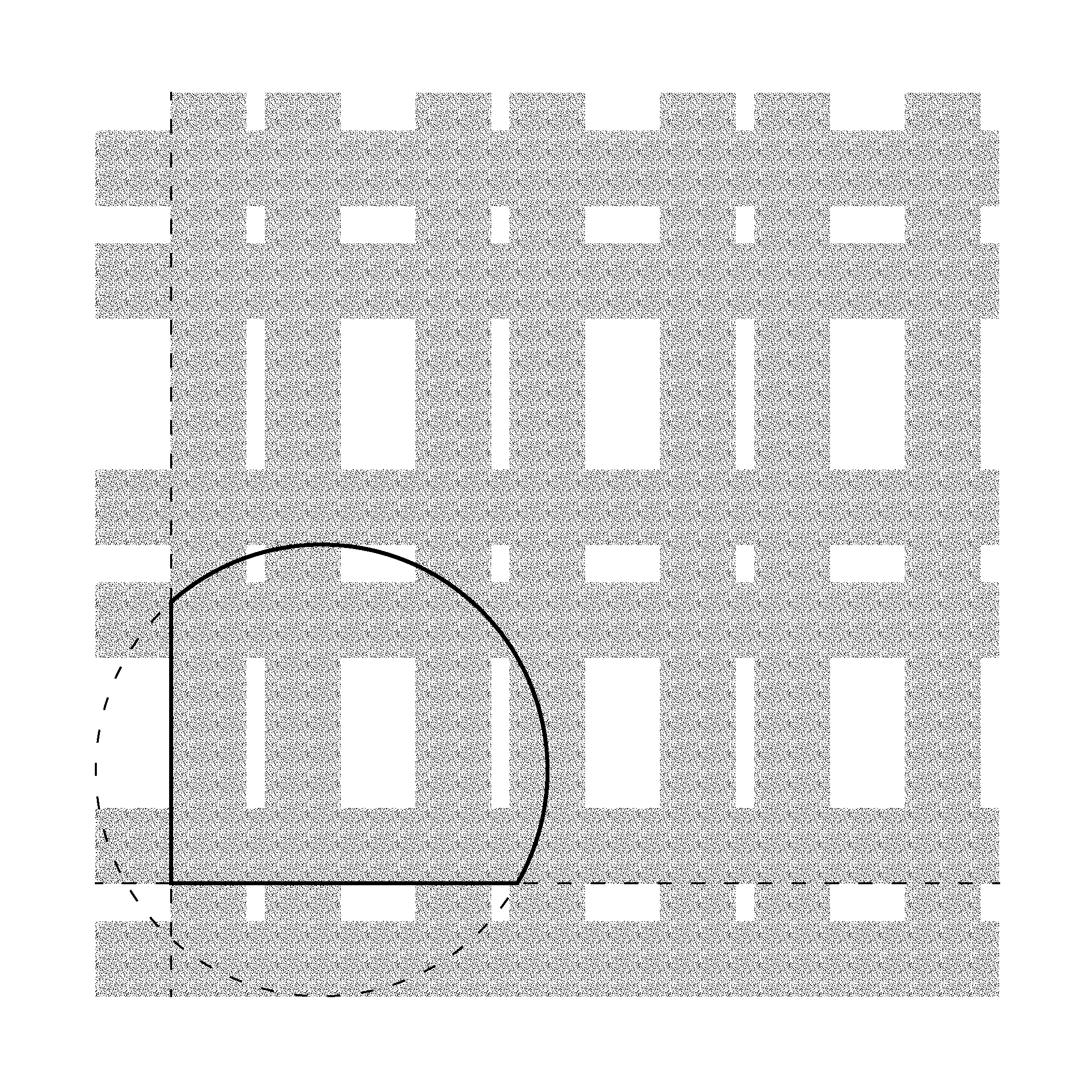
I then created two diagonal cuts across the entire field. These were folded and held in place with clips also of manilla paper to create an oblique intervention, disrupting the control of the grid upon the substrate. The clips also acted as a means of emphasizing the physicality of the study model, protruding from the flat field of the grid. I created a shape by intersecting a circle with one of the tape studies. This shape was scaled, cut from flexible paper, and photographed against the measurement grid. I experimented with different means of interaction between the cut shape and the form of the grid by printing out scaled versions of both and combining them with more tape.
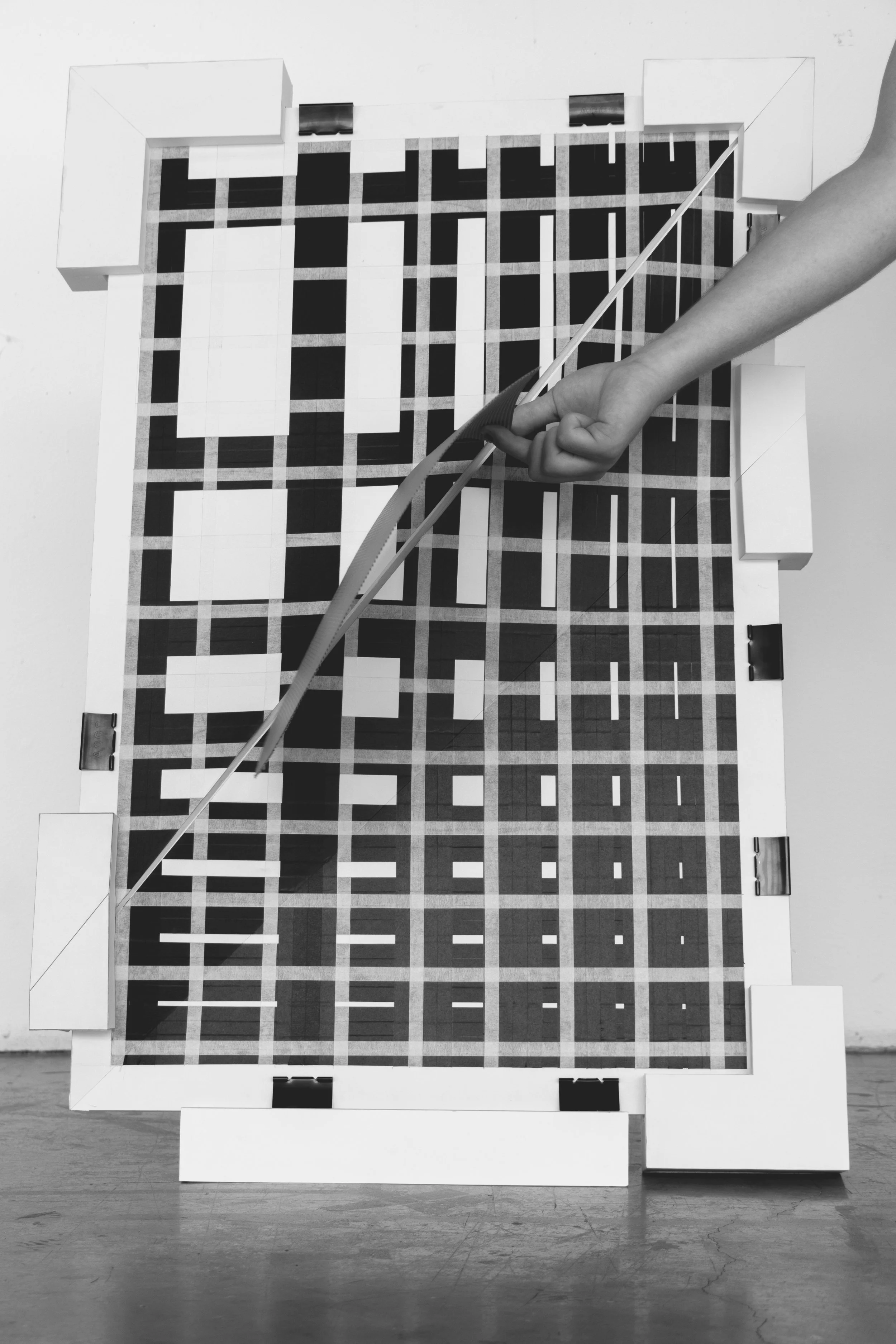
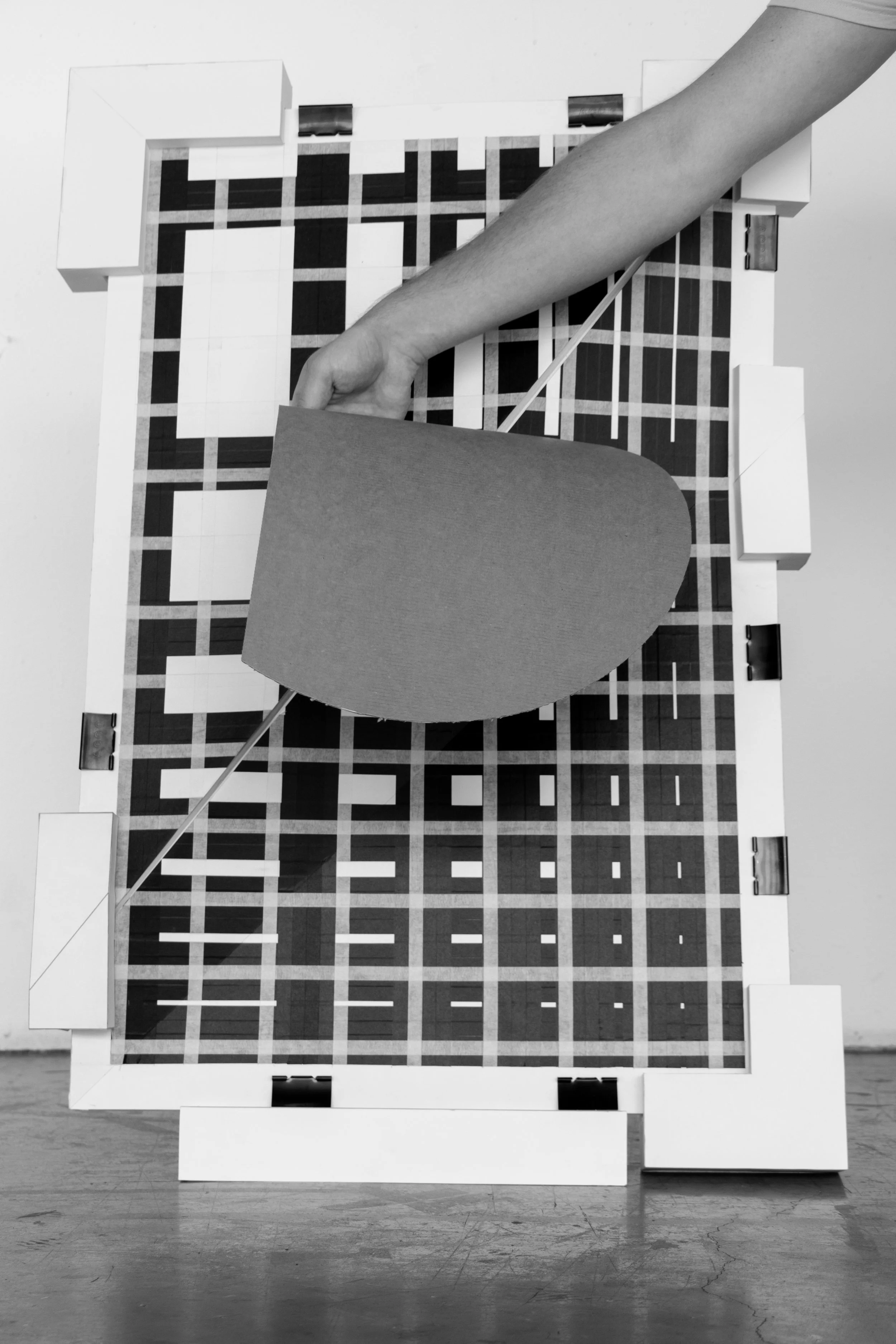
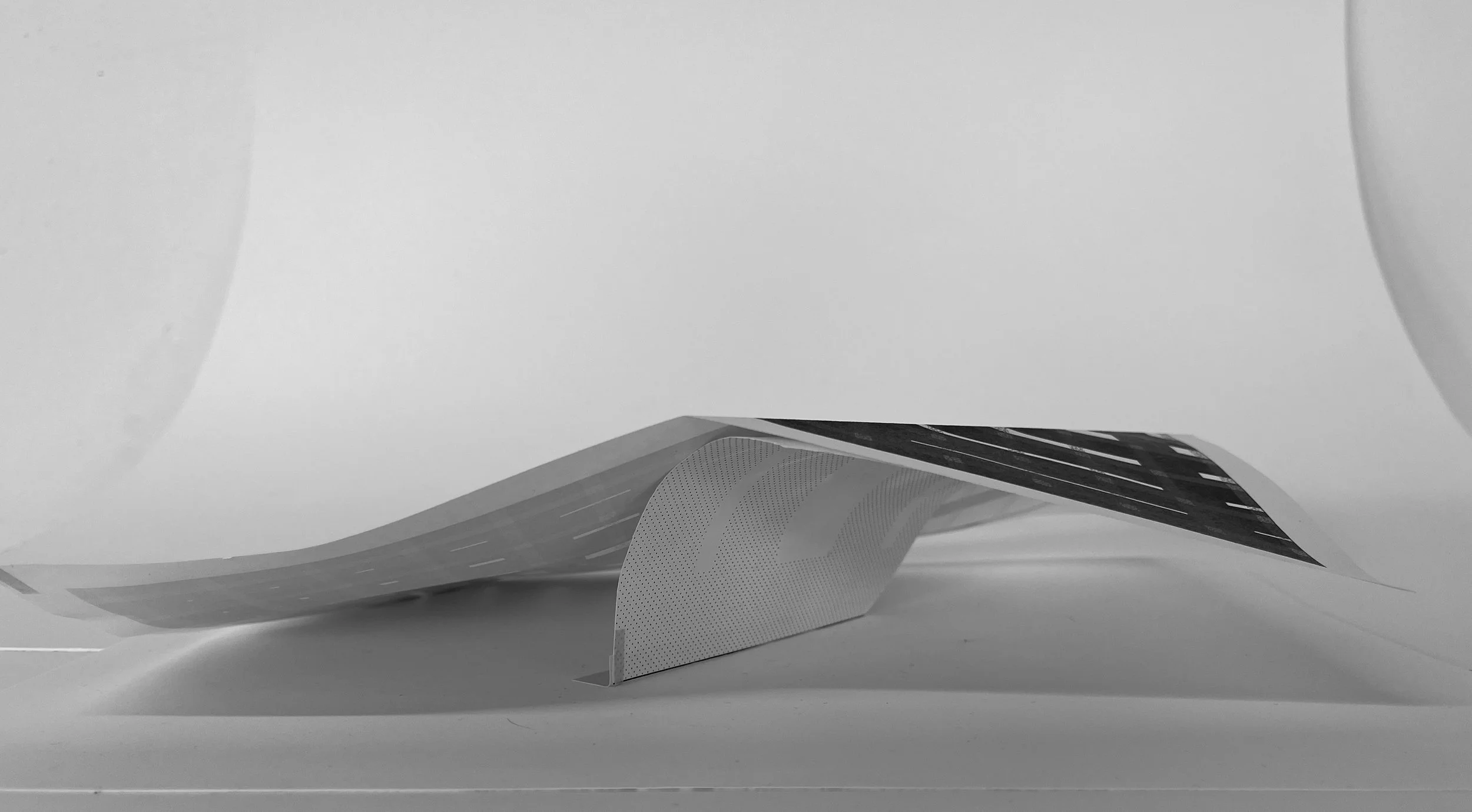
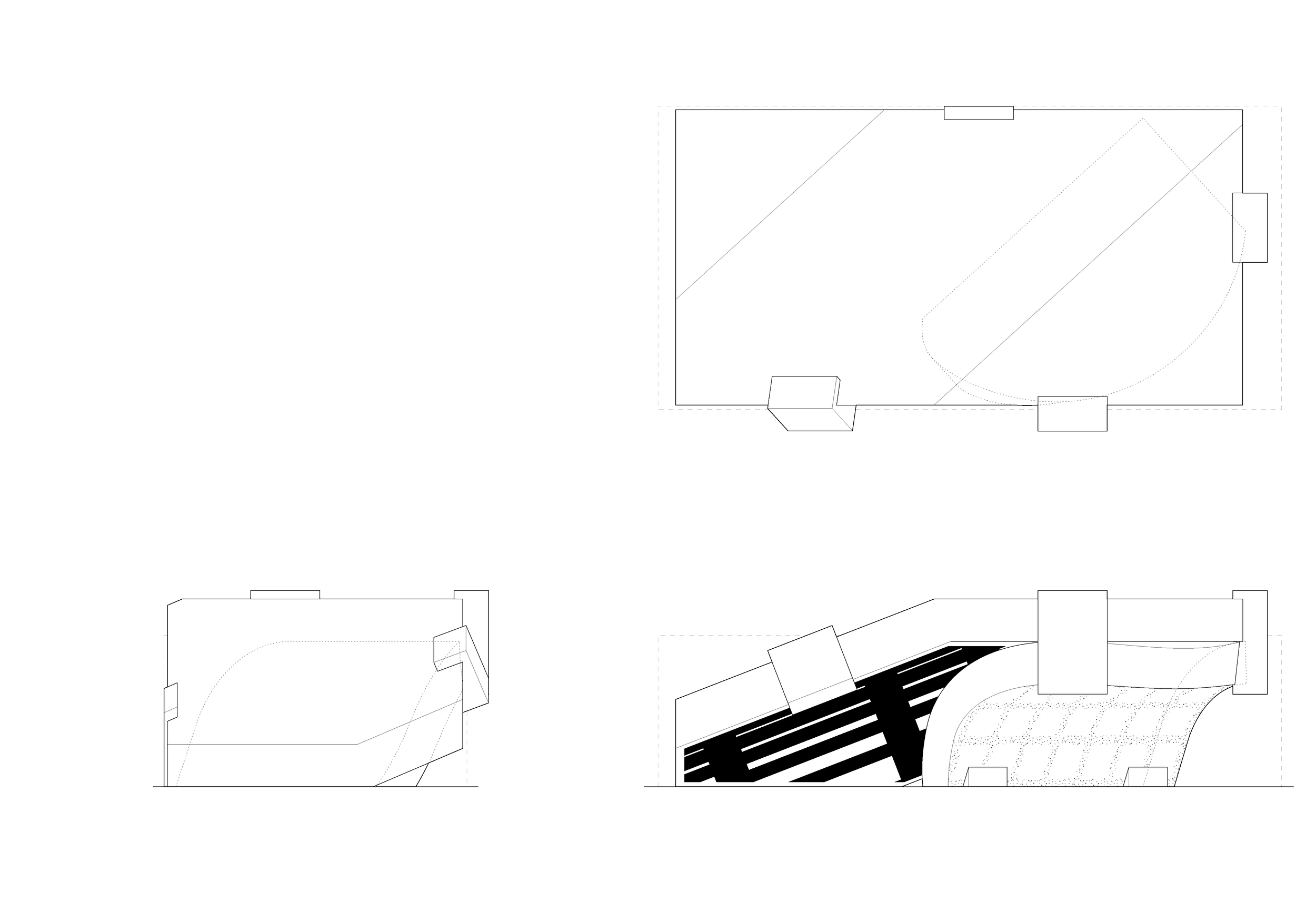
The properties of the paper itself made for an interesting dynamic between the two forms: the larger, orthogonal grid is folded precisely, whereas the smaller shape bends in support of the larger, in a similar manner to the effect of gravity on the scaled and photographed shape. I was interested by the way the material properties of the paper informed their interaction. It was as if the curved, bendy shape was “shouldering” the larger folded grid field. I expanded this idea to create the large study model.
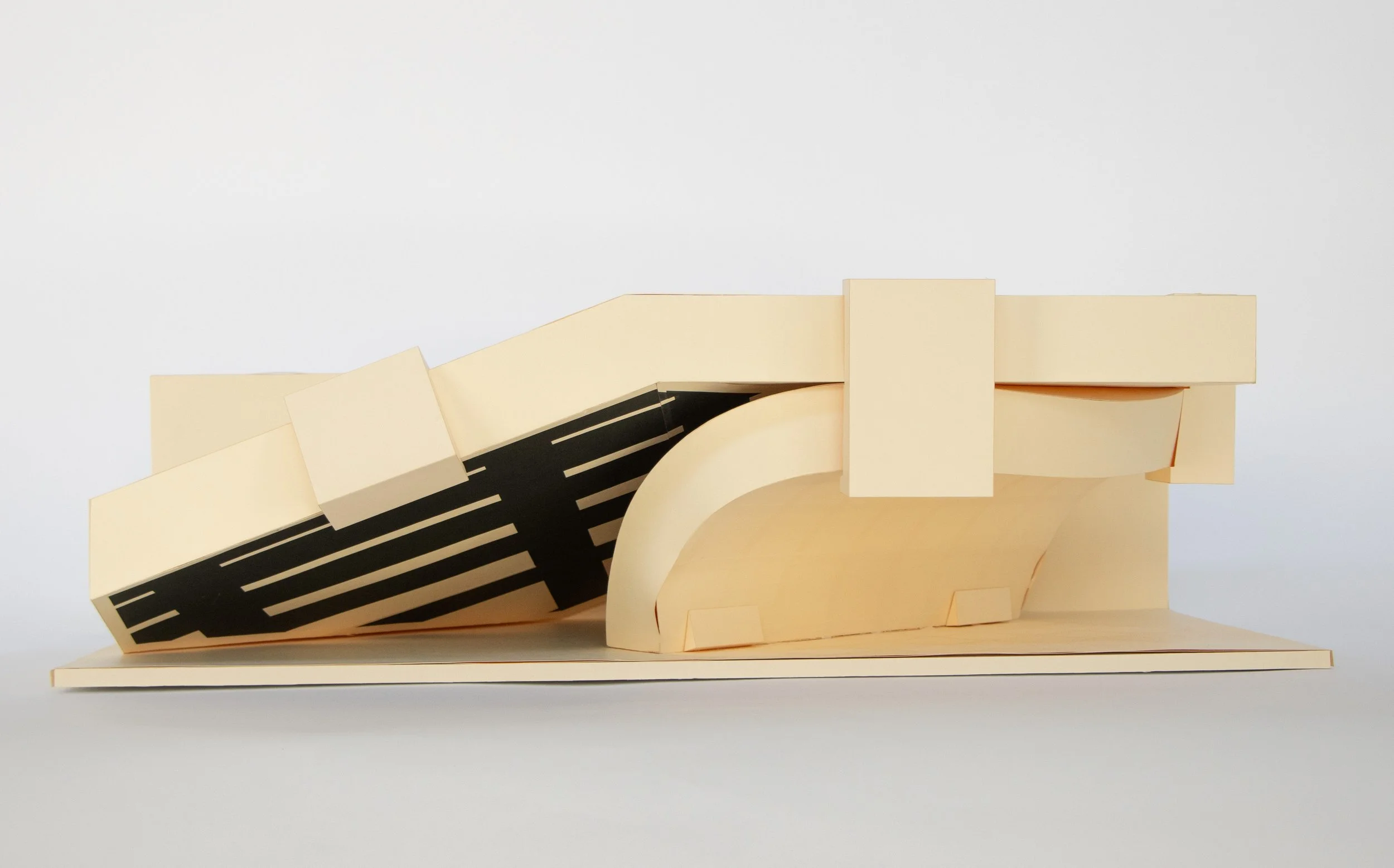
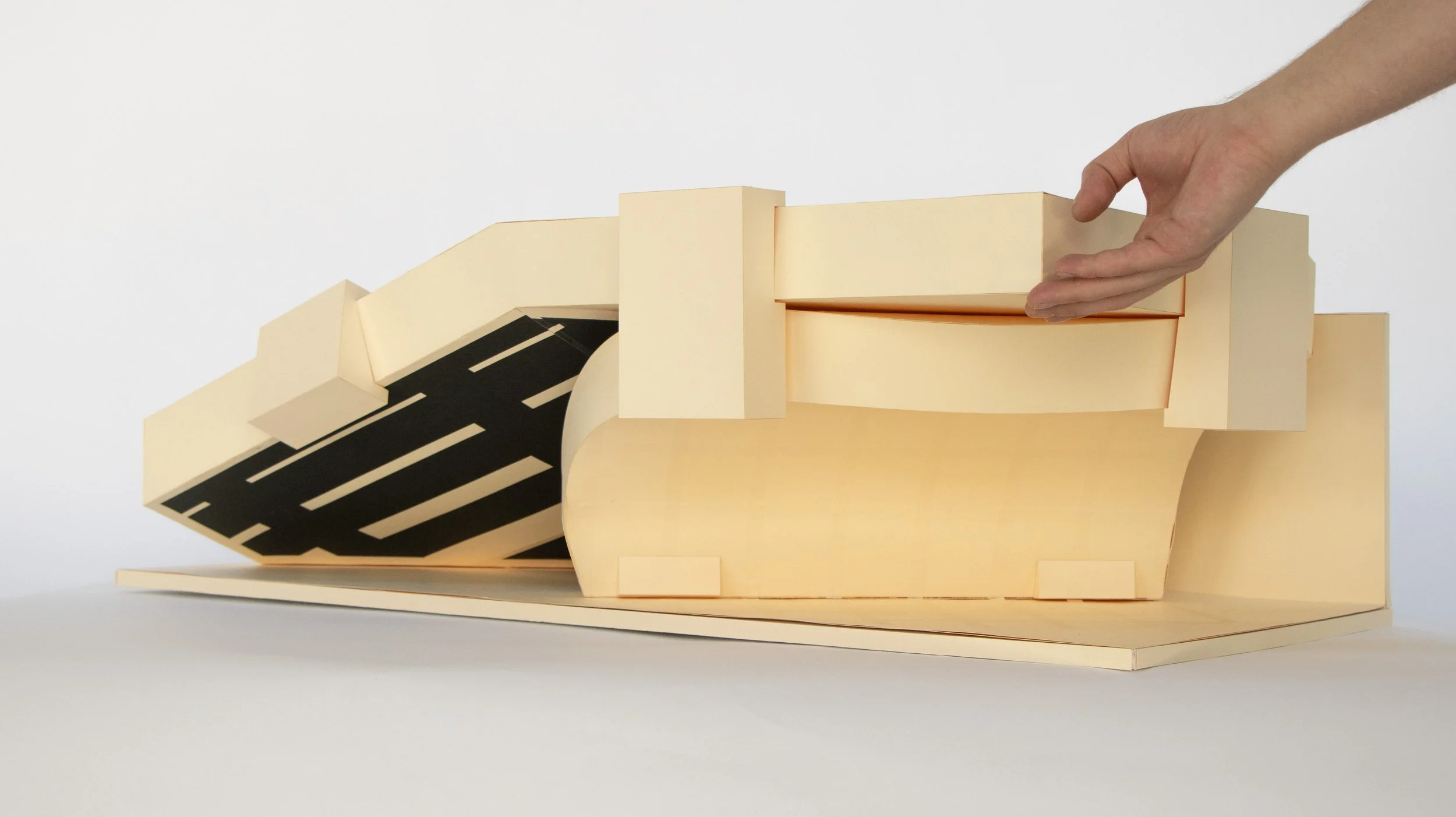
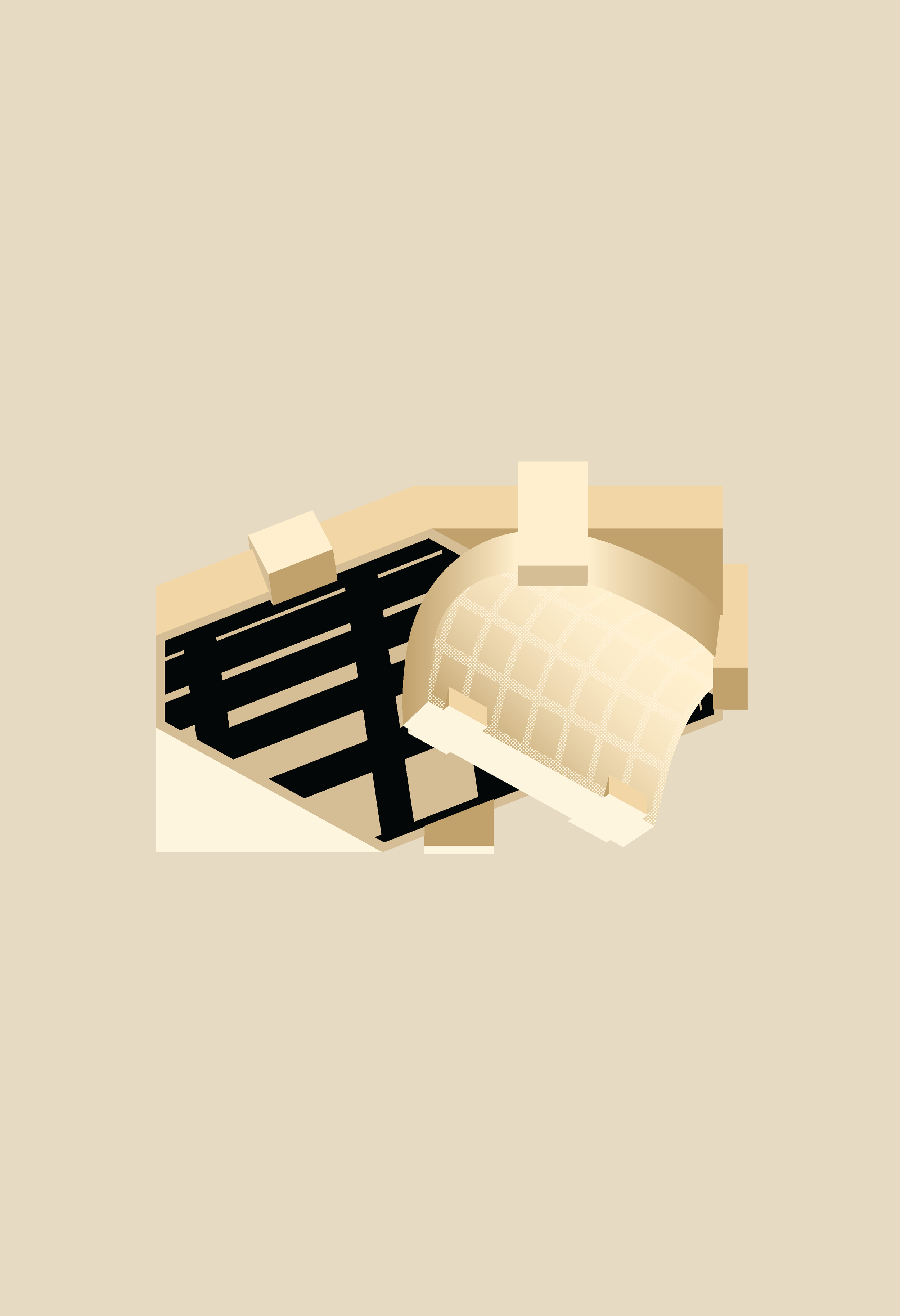
I adjusted the massing study model to adapt it to hold the program and circulation required by the theater and art gallery. The grids from the initial study became apertures, mesh façade elements, and tiling patterns both inside and outside the structure. By rotating and scaling the forms, I created a large atrium space to serve as a lobby and gathering space. The ground floor contains the main lobby, ticket desk, bathrooms, and a small office. The second floor contains the theater and gallery space.
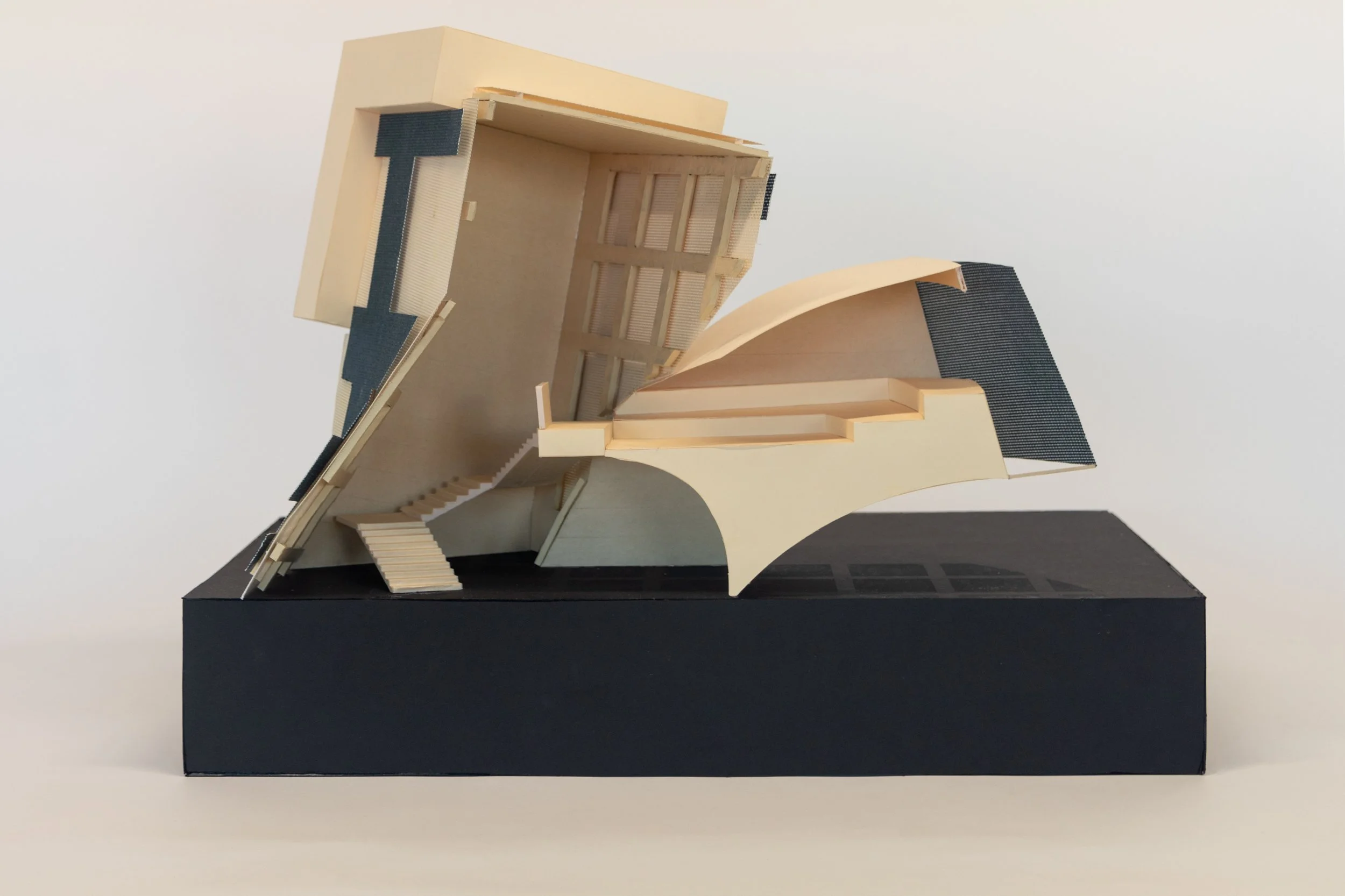
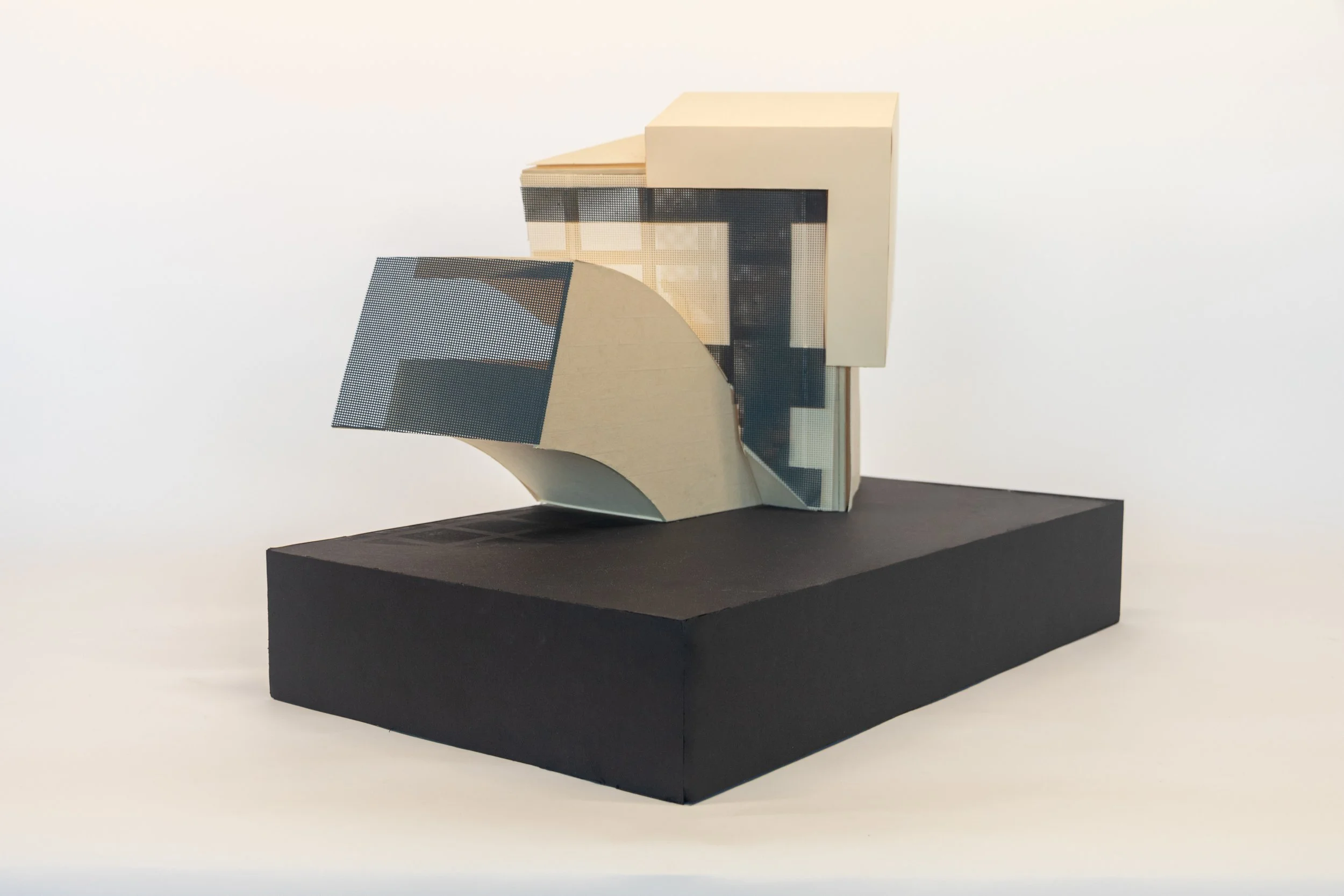
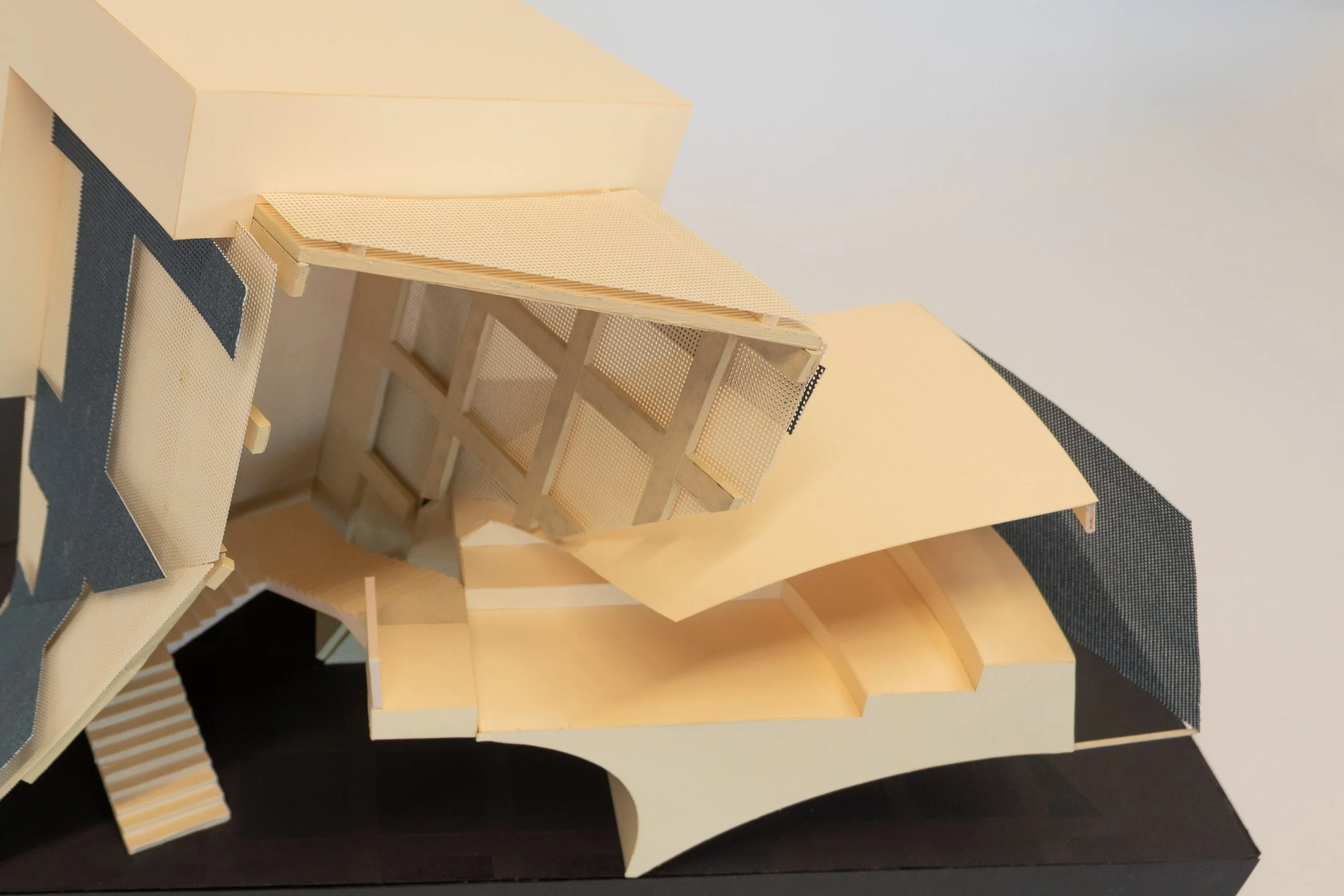
Final Section Model
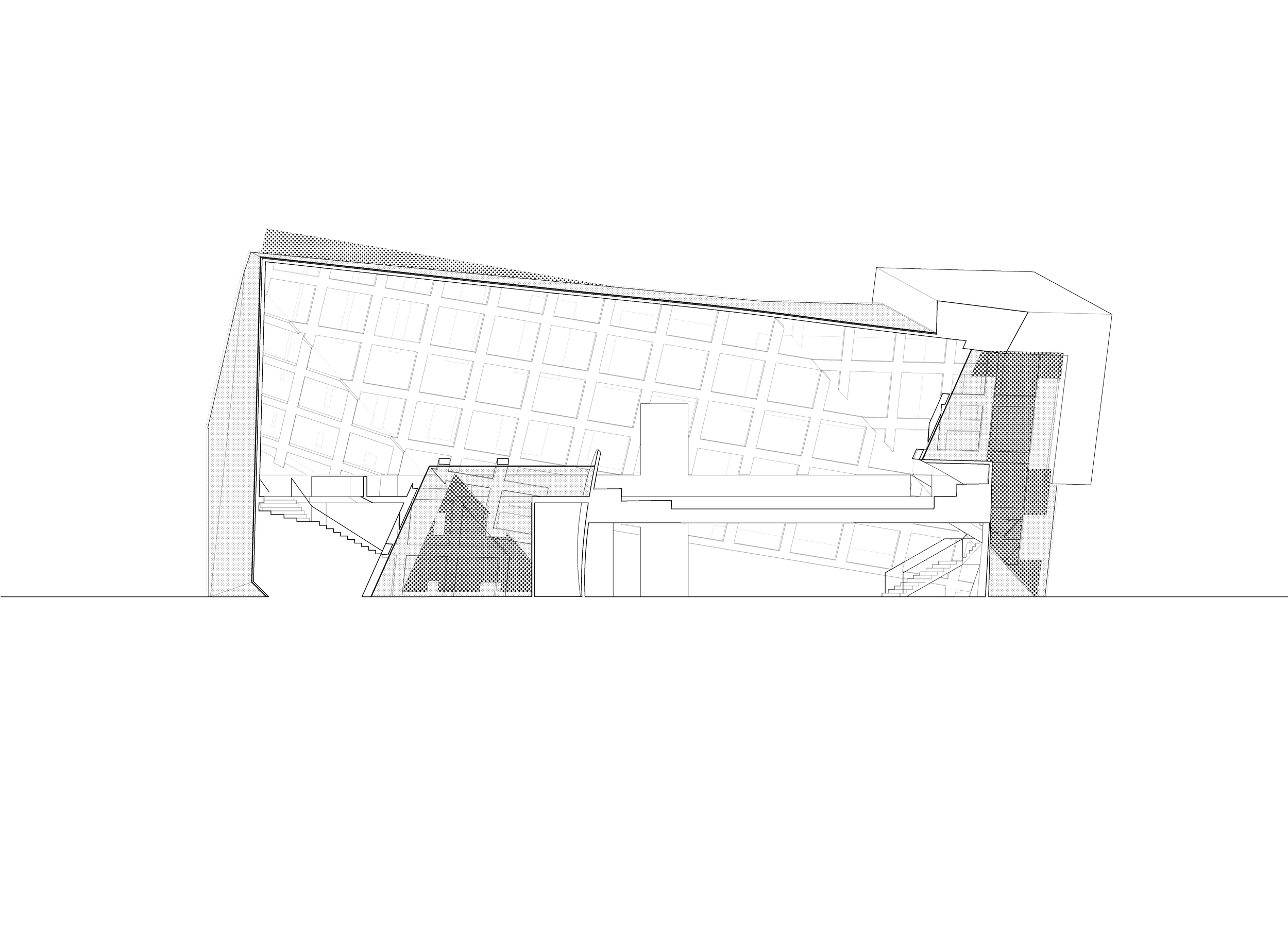
Long Section
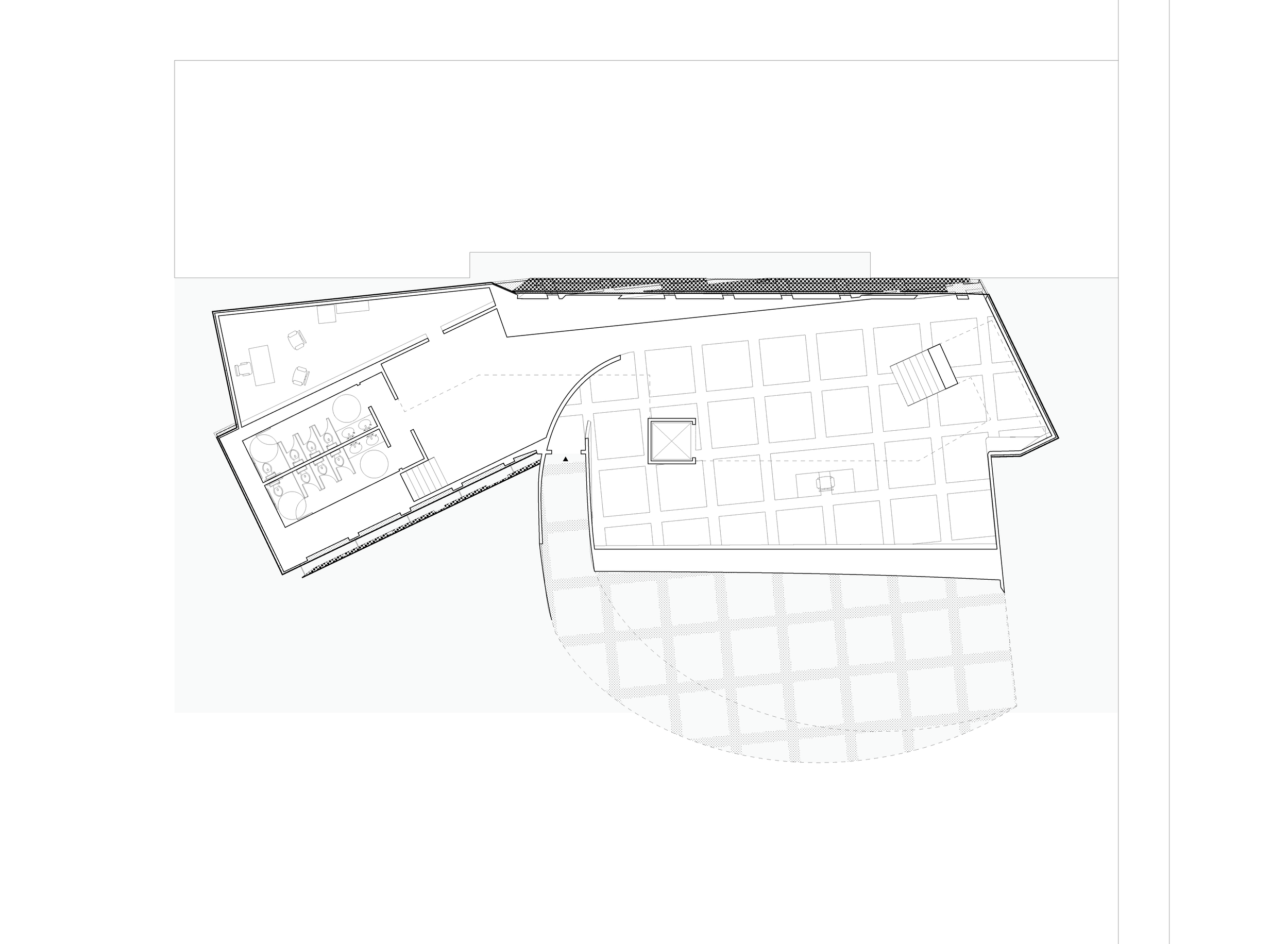
Floor 1 Plan
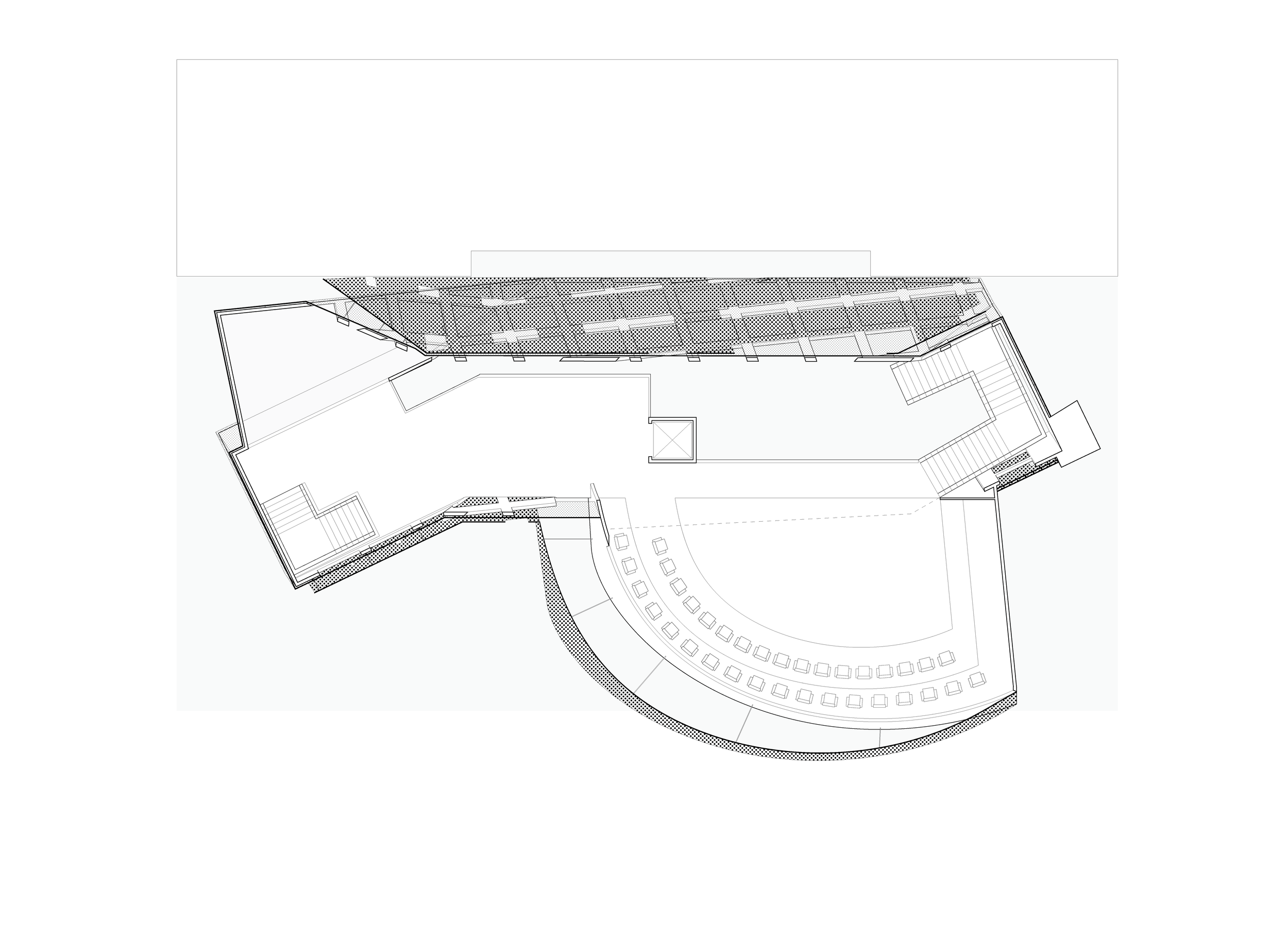
Floor 2 Plan